Jerusalem — From food parcels delivered to vulnerable families, to iftar meals served in charitable kitchens, to mobile clinics reaching isolated Bedouin communities, alongside programs supporting artisans and youth, Moroccan solidarity with Jerusalem continues to take shape through social, developmental, and health initiatives that alleviate economic hardship and reinforce the resilience of Jerusalem’s residents.
The Bayt Mal Al-Quds Asharif Agency (BMAQ), operating under the Al-Quds Committee chaired by King Mohammed VI, implements field programs that combine immediate humanitarian relief with long-term development, guided by a vision placing human support at the center of building lasting resilience.
During a week-long field visit coinciding with Ramadan 1447 AH, BMAQ Director Mohamed Salem Echarkaoui supervised the launch of a package of social, health, and economic initiatives.
A Comprehensive Social Campaign
From the villages of Nabi Samwil and Al Jadeera northwest of Jerusalem, the annual social support campaign distributed 5,000 food baskets containing 22 essential items for disadvantaged Palestinian families across the city and surrounding villages.
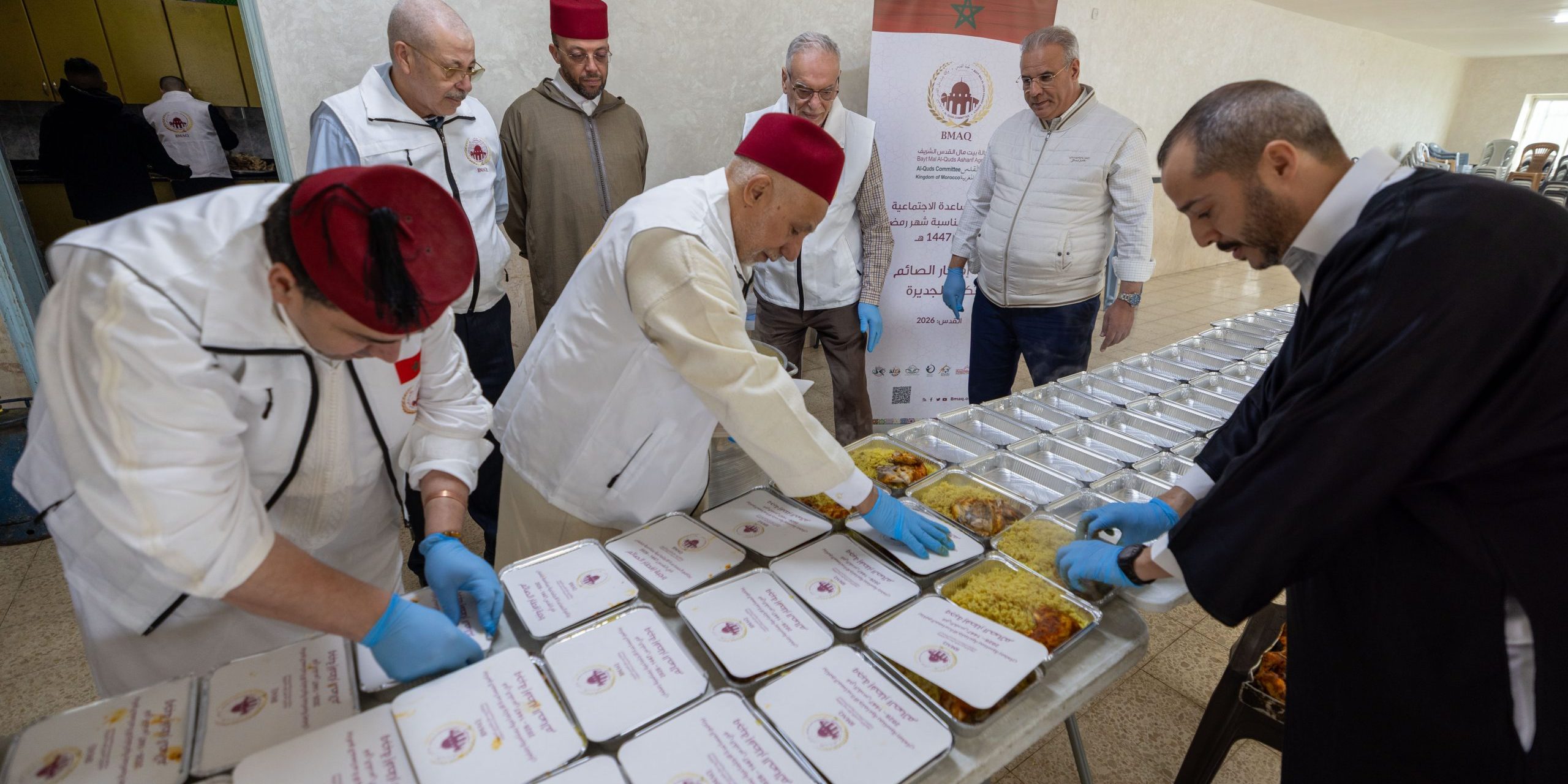
The program also supplies charitable kitchens and social centers to prepare about 20,000 daily iftar meals, both hot and cold, throughout the holy month. It includes the distribution of Eid clothing to 500 sponsored orphans and organizes religious and cultural events, as well as specialized training for local associations in marketing and human development.
“Choosing villages northwest of Jerusalem is symbolic, reflecting our commitment to reach the most vulnerable communities, especially in isolated areas affected by field restrictions,” stated Echarkaoui.
Medical Campaigns in Marginalized Areas
As part of the campaign, free medical outreach days targeted Bedouin communities in Khan al-Ahmar, Al-Jahalin, and Al-Muntar, along with nearby towns and villages. Services included mobile laboratory screenings and consultations in general medicine, pediatrics, and ophthalmology.
These initiatives form part of a broader strategy to strengthen healthcare in Jerusalem and its surroundings. BMAQ has also previously established primary healthcare units in villages and Bedouin communities and supported schools with educational and digital resources.
Dalia Jaradat, director of Astra Lab, noted that the initiative sends a strong message of solidarity, reinforcing residents’ resilience despite the region’s limited accessibility and ongoing challenges. Halima Al-Zahayka, director of Khan Al-Ahmar School, emphasized its importance for children who otherwise face a severe shortage of medical services.
Economic Empowerment for Traders and Artisans
On the economic front, BMAQ completed a training program to enhance the professional skills of Jerusalemite traders in import and export, in partnership with the Arab Chamber of Commerce and Industry in Jerusalem. The program emphasizes e-marketing, technical support, and innovation.
The Agency also launched the “Moroccan Traditional Crafts Training Week” at the Al-Aliya Foundation in Jerusalem, featuring three Moroccan artisans specializing in weaving, wood carving, and copper and silver craftsmanship. Thirty-eight Jerusalemite trainees benefited from the program.
The foundation’s director explained that the initiative aims to revive traditional crafts shared between Morocco and Palestine, equip participants with practical skills, enable them to launch income-generating projects, and strengthen economic resilience.
Academic and Cultural Engagement
The visit included academic and cultural events in Jerusalem, Ramallah, and Hebron, highlighting Moroccan cultural diplomacy and the Al-Quds Committee’s support for the city.
At Al-Quds University, a Moroccan book corner was inaugurated, showcasing BMAQ’s work in cultural restoration, education, and scientific research. In Ramallah, a meeting with Moroccan university alumni explored academic cooperation and reviewed BMAQ’s achievements over the past 27 years.
Meetings with Jerusalem Religious Authorities
During the visit, Echarkaoui met with Jerusalem’s religious and national leaders to present BMAQ’s approach, programs, and field challenges. He emphasized the Agency’s participatory approach, consulting local authorities to identify priorities and target support to the most affected sectors.
Broad Jerusalemite Praise
Religious and national leaders praised the initiatives, noting they strengthen Jerusalem’s resilience and reflect deep Moroccan solidarity. Officials highlighted that these programs have become an annual tradition demonstrating Morocco’s ongoing commitment to the city and its residents.
An Integrated Vision for Supporting Resilience
Echarkaoui underscored that BMAQ operates under King Mohammed VI’s directives, guided by a holistic vision prioritizing social support for vulnerable groups, economic empowerment, and the preservation of Jerusalem’s cultural and civilizational heritage.
Over more than 25 years, the Kingdom of Morocco has financed projects in education, healthcare, housing, cultural restoration, and social services, establishing a lasting and tangible Moroccan developmental presence in Jerusalem.