Jerusalem – The Bayt Mal Al-Quds Asharif Agency (BMAQ), affiliated with the Al-Quds Committee chaired by His Majesty King Mohammed VI, continued on Sunday its free medical campaign program for the benefit of Palestinian residents in Bedouin communities and villages across the Jerusalem Governorate.
The medical caravans, organized in partnership with "Astra Lab" Laboratories, made a stop in the village of Sheikh Saad, southeast of Jerusalem. Home to around 3,500 residents, the village exemplifies the severe isolation faced by many Palestinian communities, a situation that has worsened in recent years.
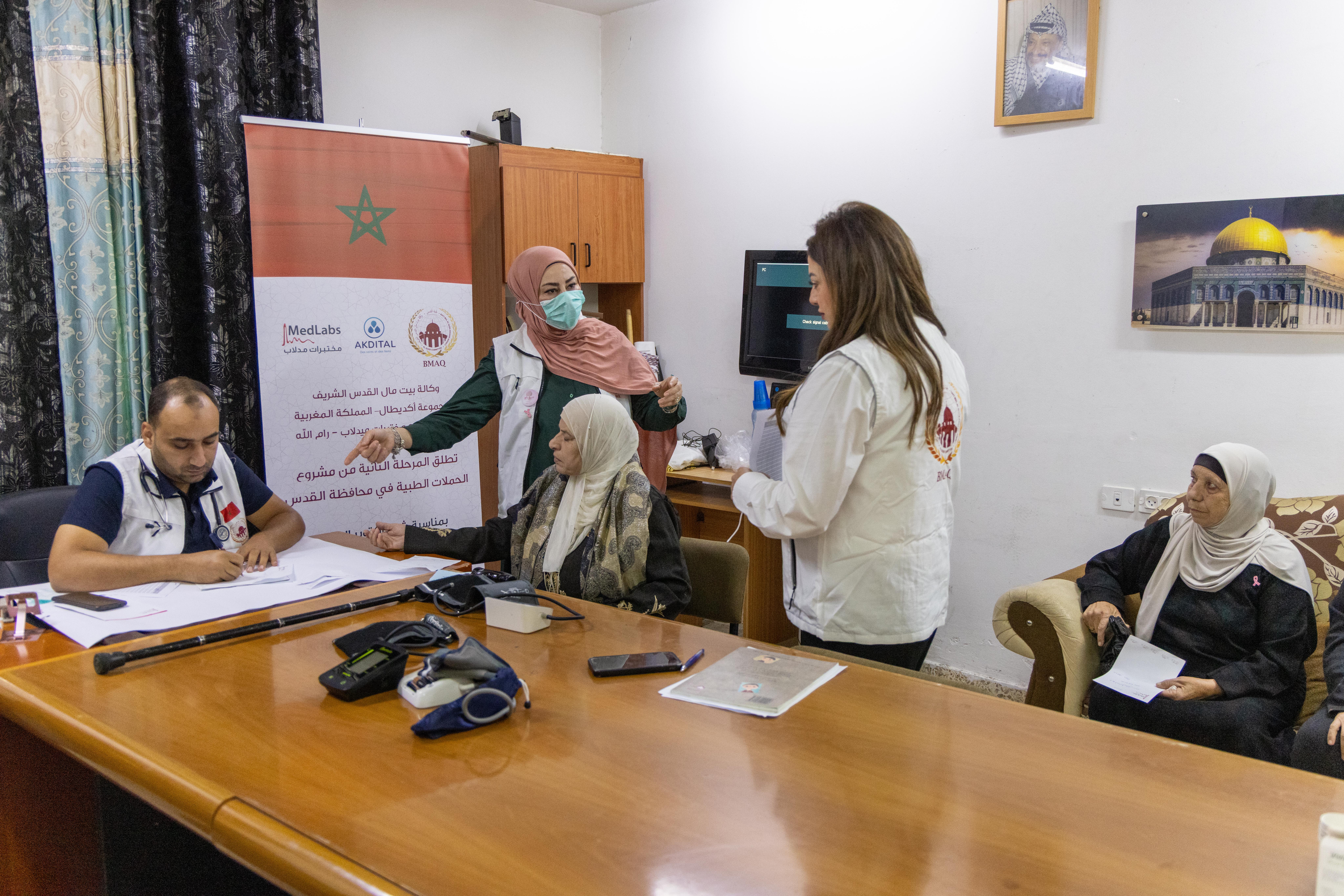
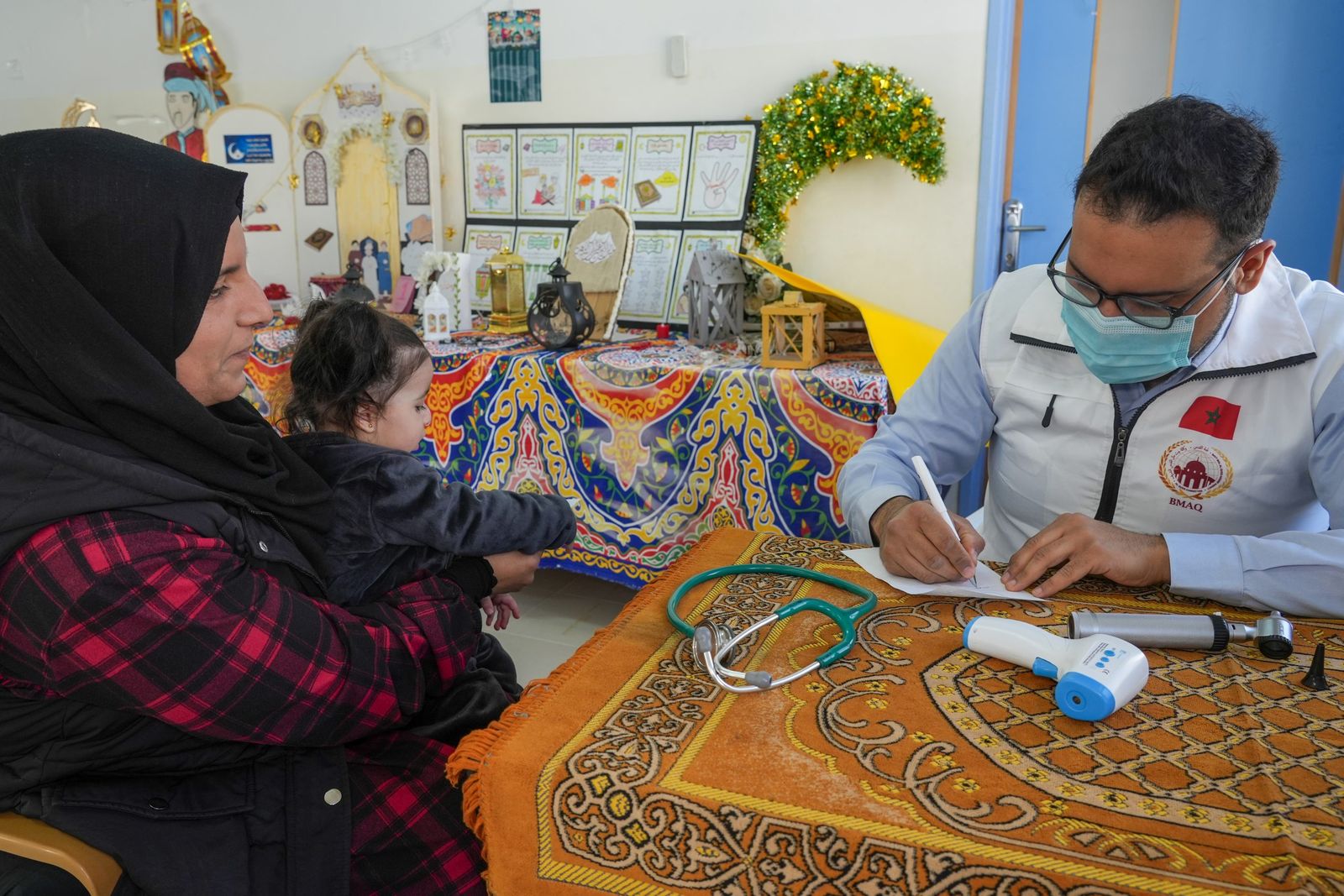
The arrival of the mobile medical laboratory and specialized medical staff in general medicine, internal medicine, pediatrics, and ophthalmology was a true lifeline for residents, especially for those unable to leave the village due to restrictions imposed by Israeli forces on vehicle movement, forcing residents to walk to meet their basic needs.
Jamal Zaiter, head of the Sheikh Saad Village Council, said that the measures imposed by Israeli authorities have isolated the village and restricted residents’ access to medical facilities in Jerusalem, making such campaigns—particularly medical ones—an urgent necessity to help address this gap.
He added that the limited healthcare services in the village exacerbate residents’ suffering, as there is only one clinic operating one day per week under difficult conditions, which falls short of meeting even the population’s basic needs.
He praised the positive impact of these medical campaigns on residents and expressed hope that they will continue in the future, noting the importance of BMAQ’s provision of medications alongside examinations and diagnoses.
Zaiter also expressed deep appreciation to BMAQ, commending Morocco’s continuous support and the solidarity of the Kingdom—its King, government, and people—with the Palestinian cause and the residents of Jerusalem, including Sheikh Saad village.
Citizen Mohammed Moussa noted that the medical campaign is of particular importance to the village, which has effectively been cut off by the military checkpoint, thereby increasing the distance to healthcare facilities and significantly restricting residents’ mobility.
He added that access to the village is difficult for institutions, which is why residents greatly value any organization that comes to provide services—particularly given the high number of elderly residents and patients with chronic conditions such as hypertension and diabetes, who require continuous monitoring that the only local clinic is unable to provide.
Similarly, Jamal Ellan stressed the urgent need for such initiatives, noting that residents requiring treatment must travel to the town of Al-Eizariya, approximately ten kilometers away—a journey that involves significant transportation challenges due to movement restrictions and high costs.
Dareen Jaradat from "Astra Lab" laboratories, a partner in implementation, explained that these campaigns target all age groups—children, women, men, and the elderly—and services are adapted to meet the needs of each geographic area visited.
She added: “Our services are not limited to general check-ups but include specialized fields such as internal medicine, ophthalmology, and laboratory tests, in addition to immediate coordination for referring critical cases requiring surgical intervention or specialized hospital follow-up.”
She stressed that the areas targeted by these campaigns require regular and sustained visits to ensure broader coverage and the continuity of healthcare services for residents.
Since their launch, the campaigns have followed a clearly defined strategic path aimed at reaching the most marginalized areas, starting with Khan Al-Ahmar and the Jahalin and Al-Muntar communities, and extending to Jaba, Hizma, Rafat, Qalandia Camp, and villages northwest of Jerusalem, including Qatna, Biddu, and Sheikh Saad.
So far, the ongoing campaigns have benefited around 1,200 Palestinian citizens, with an average of 150 beneficiaries per campaign. In addition to diagnosing medical conditions, 15 cases have been referred to hospitals for further treatment, including open-heart and cardiac catheterization procedures requiring urgent medical intervention.
The medical campaign program is expected to continue through 24 campaigns covering 31 areas, with the possibility of combining multiple areas within a single campaign based on population density. In its final phase, it will also provide beneficiaries—particularly children—with eyeglasses based on medical prescriptions, along with necessary medications, to ensure the sustainability of its health impact.