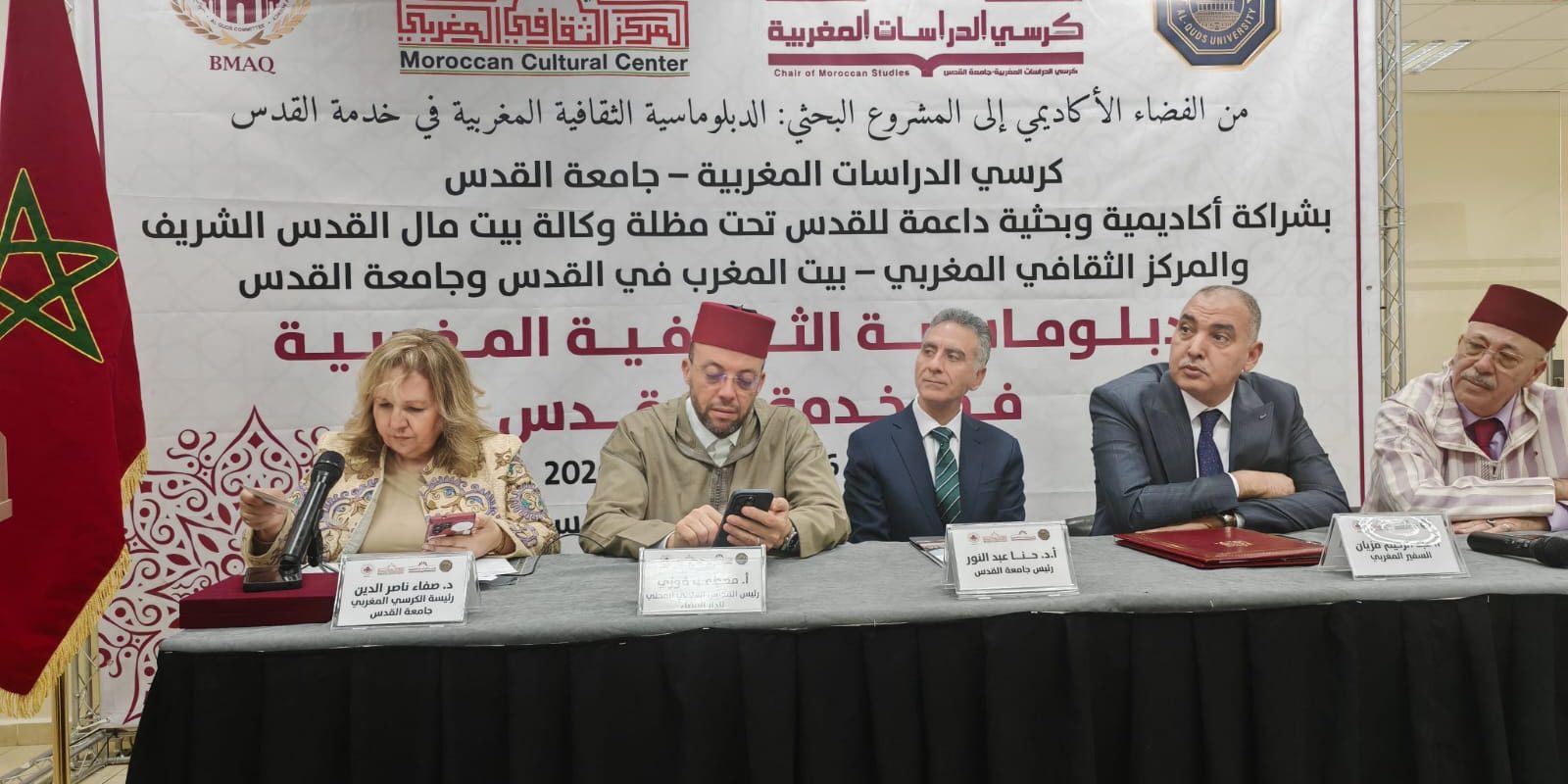
Jerusalem — As part of a strategic vision to consolidate Morocco’s academic presence in Jerusalem and deepen scientific and cultural cooperation between the Kingdom and Palestine, the Moroccan Studies Chair at Al-Quds University organized academic and cultural activities under the theme: “From Academic Space to Research Project: Moroccan Cultural Diplomacy in the Service of Jerusalem,” with the participation of Moroccan and Palestinian scholars.
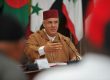
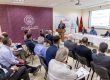
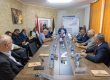
The program began with a visit to the headquarters of the Moroccan Studies Chair at the Faculty of Engineering, followed by the inauguration of the Moroccan Book Pavilion at the university library, attended by the Ambassador of the Kingdom of Morocco to the State of Palestine, the University President, the Director of the Bayt Mal Al-Quds Asharif Agency (BMAQ), Mohamed Salem Echarkaoui, and the Chairholder, Safaa Nasserlddine.
The academic program featured a lecture and research presentations on Moroccan cultural diplomacy in service of Jerusalem.
In his address, Mr. Echarkaoui reviewed BMAQ’s role in supporting the resilience of Jerusalemites and strengthening the city’s civilizational identity. He affirmed that the Kingdom of Morocco, under the leadership of King Mohammed VI in his capacity as Chairman of the Al-Quds Committee, mobilizes its cultural, heritage, and educational resources to reinforce the Arab and Islamic presence in Jerusalem through high-impact initiatives benefiting diverse segments of society.
He also highlighted practical examples of Moroccan cultural diplomacy, including the restoration of historic landmarks, the organization of Moroccan cultural weeks, support for traditional crafts, and educational programs and scholarships that empower Jerusalem’s community economically and culturally while strengthening its resilience.
For his part, the President of Al-Quds University emphasized the importance of academic initiatives that enhance international partnerships and support research serving Jerusalem, stressing the need to expand academic and media cooperation to promote the city’s historical and civilizational narrative.
The Moroccan Ambassador underscored the importance of cultural diplomacy and soft power in strengthening historical and human ties between Morocco and Jerusalem, noting that education and scientific research constitute a fundamental pillar for protecting identity and supporting social stability in the city.
Mohamed Sammari, a member of the Scientific Committee of the Moroccan Studies Chair, presented an analytical reading of cultural diplomacy and its theoretical frameworks, emphasizing the importance of grounding it in rigorous methodological research approaches.
Mustapha Fawzi, President of the Local Scientific Council of Ain Chock Prefecture in Casablanca, affirmed that the Moroccan presence in Jerusalem—through its historic endowments and its scholarly and Sufi heritage—forms an integral part of Morocco’s deeply rooted historical identity.
Dr. Safaa Nasserlddine explained that these activities mark the transition of the Moroccan Studies Chair into a new phase focused on deepening research projects and expanding scientific cooperation, while linking academic research with modern technological applications and engaging students in practical knowledge-documentation initiatives.
Researcher Bashir Barakat presented his book “Maqdisi Plans,” highlighting the importance of documenting Jerusalem’s urban and cultural heritage. This was followed by a presentation by student Taqa Atiq on a project to digitize the book into an interactive digital platform, illustrating the integration of academic research with technological solutions.
The symposium also included presentations of selected abstracts from researchers participating in the Chair’s second research call, reflecting the diversity of scholarly approaches and their contribution to deepening studies related to Jerusalem’s history and memory.
At the conclusion of the event, Mr. Ziad Ayad was appointed as a member of the Scientific Committee. He is an academic in the Department of Political Science at Al-Quds University and a graduate of Hassan II University of Casablanca.