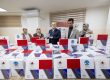
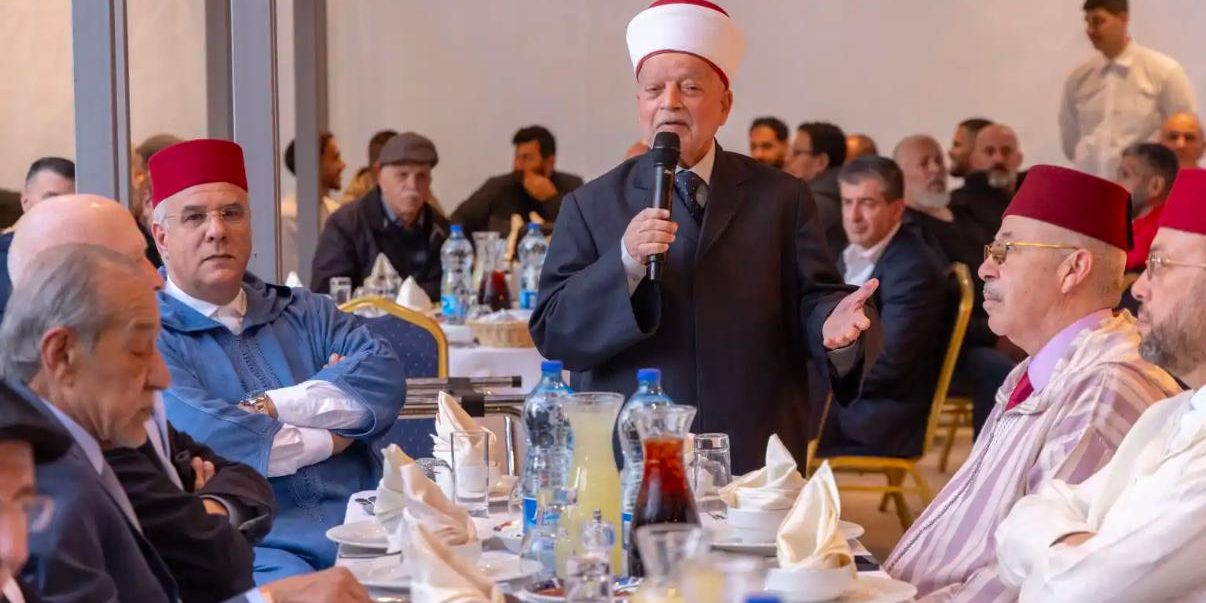
Jerusalem — The Bayt Mal Al Quds Asharif Agency (BMAQ) hosted a Ramadan iftar on Friday evening in Jerusalem, attended by the Agency’s director, Mohamed Salem Echarkaoui, along with prominent Jerusalemite figures, Islamic and Christian religious authorities, and representatives of civil institutions and associations.
The iftar was attended by Adnan Al-Husseini, member of the PLO Executive Committee and head of the Jerusalem Affairs Department; Sheikh Mohammed Hussein, Grand Mufti of Jerusalem and the Palestinian territories; Sheikh Ikrima Sabri, head of the Supreme Islamic Council; its Secretary-General Hatem Abdel Qader; Greek Orthodox Archbishop Atallah Hanna of Sebastia; and Bilal Al-Natsha, Secretary-General of the Jerusalem National Popular Conference.
Adnan Al-Husseini said, “We are pleased to mark the holy month of Ramadan alongside our Moroccan brothers from the Bayt Mal Al-Quds Asharif Agency. It has become a valued annual tradition to welcome their visit to Jerusalem, where they provide vital assistance to families in need.”
He affirmed that this initiative reflects a “commendable tradition” that BMAQ has consistently upheld, expressing his appreciation for the Moroccan delegation’s visit to Jerusalem despite the city’s challenging circumstances.
For his part, Sheikh Mohammed Hussein praised the role of the Agency in supporting Jerusalem’s residents across education, healthcare, and social services—particularly its humanitarian assistance to vulnerable families—highlighting its outreach in Bedouin and rural communities as well as its aid-distribution efforts.
He expressed gratitude to BMAQ for its dedicated efforts in Jerusalem and its surroundings, describing them as deeply appreciated support from Morocco—its King, government, and people—and voicing hope that this assistance would continue in the future.
Sheikh Ikrima Sabri, in turn, commended the Agency’s efforts, led by King Mohammed VI, Chairman of the Al-Quds Committee, for the services provided to Jerusalemites during Ramadan.
Hatem Abdel Qader also expressed his appreciation to the Agency for organizing the iftar, emphasizing that it “has spared no effort in supporting Jerusalem, its people, and its institutions.”
He added that Ramadan is a renewed occasion that highlights the historic ties linking Moroccans with Jerusalemites, Palestine, and the city of Jerusalem.
.
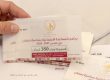
At the conclusion of the iftar, “Ramadan Food Basket” vouchers were distributed to associations and institutions benefiting from the Agency’s programs.
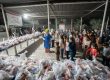
The Agency had earlier launched its annual social assistance campaign from the villages of Nabi Samwil and Al-Judeira, northwest of Jerusalem. This year’s initiative includes distributing 5,000 food baskets containing 22 essential items to needy Palestinian families in Jerusalem and nearby villages.
The program also provides food supplies to charitable kitchens and social centers to prepare around 20,000 daily iftar meals—both hot and cold—throughout the holy month. It further includes Eid clothing for 500 orphans sponsored by the Agency, religious and cultural evenings, and training programs for local associations in marketing and human development.